
Seven Engaging Ways to Teach the Stations of the Cross
Leader: We adore you, O Christ, and we praise you.
All: Because by your holy Cross, you have redeemed the world.
But there are two things that stand out in my memory (plus the smell of tuna casserole from the potluck afterward). One Friday, the priest went through the Stations and taught background information about each one. And once a year, the teenagers acted out the Stations. As I pray the Stations with students and children, I try to incorporate both tradition and variety to help them make lasting memories. Here are seven ways to Teach the Stations of the Cross.

1) Repetition
I’d love to say that my students are at the Stations every week during Lent, but we haven’t reached that goal yet—maybe this is the year. Still, I believe students should experience this prayer more than the one time it’s usually squeezed into Wednesday night Religious Education classes.
2) Background information
In high school, when Father taught about the Stations, he began before the Passion. He explained Holy Thursday and described the three-sided table where the apostles sat. It took me a while to picture three tables arranged in a U-shape, with the apostles seated along the outer edges and the inner space used by servers. That small detail changed my mental picture and helped me connect to the story.
As I Teach the Stations of the Cross to students, we pause to discuss the tension between soldiers and Hebrews, the need to remove the body before the Sabbath, and even where the nails would have been placed. I want students to understand the historical and human background behind each Station.
3) Games
We use cards for each Station—such as the Stations of the Cross Sorting Cards—to sort the Stations and play games like Baby Monkey Astronaut. We race to see who can sort them the fastest and play Catchphrase using words and phrases from the Stations. Hands-on games help students learn the sequence and meaning without feeling overwhelmed.
4) Motion
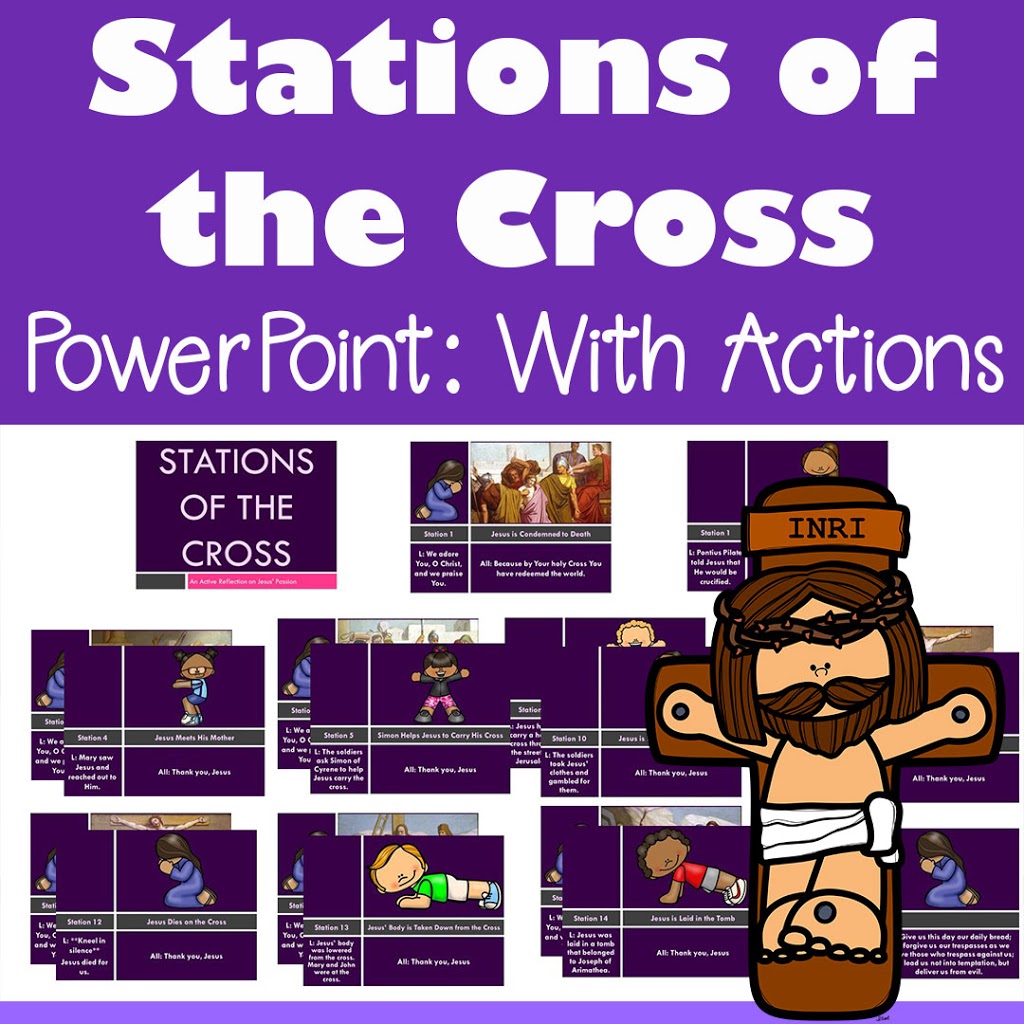
For younger students, movement makes a huge difference. There is always standing and kneeling, but when I taught younger grades on Wednesday nights, they lost focus long before we reached the final Station. I created the Active Stations of the Cross PowerPoint so they could move, pose, and engage visually.
When I lead students through this version, we follow the traditional call and response with standing and kneeling. Then, I announce each Station and we make the pose shown on the slide. For some Stations, I ask students to hold the pose while I add background information. For most, we pose, say “Thank you, Jesus,” and then move to the next Station.
5) Mood
My younger sister used to cry during the Stations of the Cross when she was little. On one hand, I love that she connected so deeply to the emotion of the prayer. On the other hand, there is a time and place for such heavy emotion—and in front of classmates is not that place. When I Teach the Stations of the Cross, I focus on the story and sacrifice but also emphasize the joy and hope of salvation.
6) Food
Growing up, we always had a potluck on Friday nights before the Stations. The churches around us now have Friday fish fries, often without any direct connection to the Stations. That’s totally normal—but it still throws me off. In my mind, Friday night is Stations and potluck. As an adult, we used to host a potluck at our house and then walk to Stations at our parish. We haven’t done this in a few years, but maybe this is the year to bring it back.
7) Connection
My sister once did a project where her friends acted out modern versions of the Stations—someone falling in a hallway, someone helping another with their books, and so on. I haven’t been brave enough to ask my students to do that, but I do ask them to make personal connections.
Younger students draw the Station that means the most to them and explain why. Older students create slides with the image, title, and a personal connection. When I did this with junior high students, I assigned each student two or three Stations and combined their work into a class presentation. My seniors were able to complete all the Stations on their own.
Teaching the Stations can look different in every classroom, but the goal is always the same: helping students connect with Jesus’ journey in a meaningful and memorable way. Whether you use motion, background information, games, or personal reflection, each approach opens the door for deeper understanding. As you Teach the Stations of the Cross, I hope these ideas give you practical, creative ways to make this powerful prayer come alive for your students. Let me know which ideas you try—or how you make the Stations meaningful in your own classroom or home!
Do you want more Lent ideas? Check out these posts…